Introduction: The Undisputed Monarch of Global Dairy Production
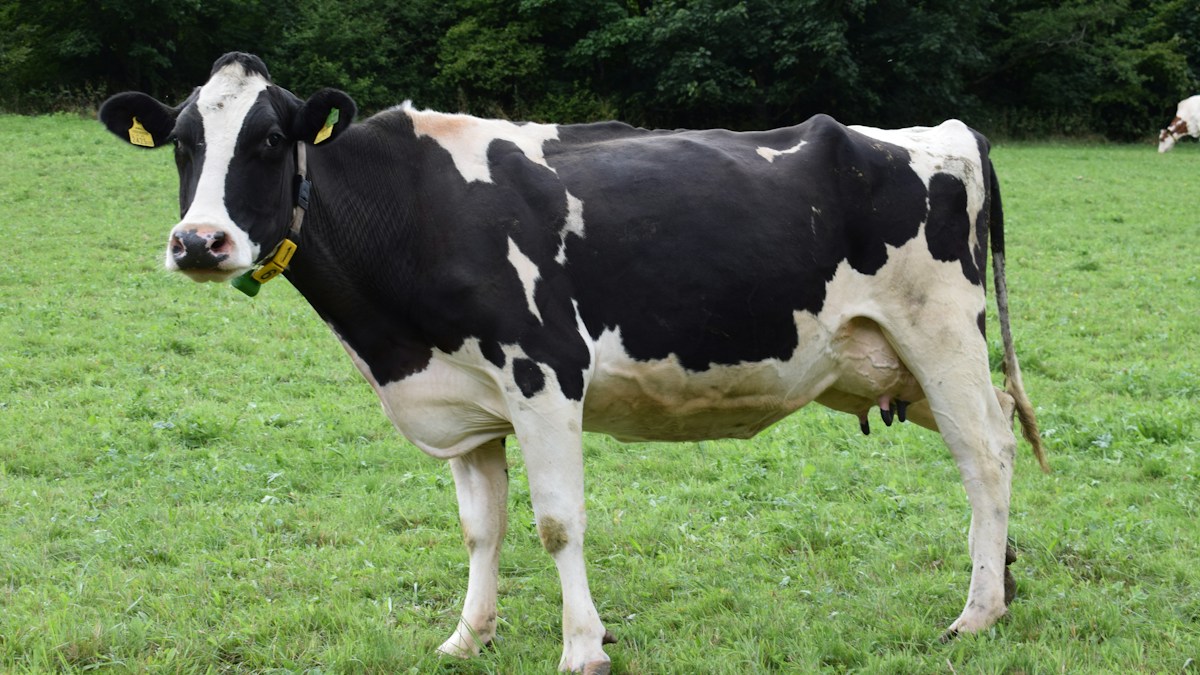
In modern industrial dairy agriculture, no bovine breed exerts greater economic influence or commands a larger market presence than the Holstein-Friesian. Recognized instantly by their distinctive black-and-white piebald markings (or occasional recessive red-and-white coloration), Holsteins account for more than 90% of the commercial dairy cattle population in North America, Western Europe, and intensive agricultural zones worldwide. Their unrivaled genetic capability to convert high-energy forage rations into staggering volumetric yields of liquid milk has transformed fluid milk economics over the past century.
Yet maintaining a herd of high-producing Holsteins—where elite mature cows frequently peak above 120 to 140 pounds (55 to 65 kilograms) of milk per day—is a demanding biological balancing act. These bovine athletes operate under extreme metabolic tension. High milk production places massive physiological demands on hepatic gluconeogenesis, calcium homeostasis, and reproductive endocrinology. Without precision nutritional management, optimized housing environments, and genomic selection that balances volumetric output with somatic cell resilience and daughter pregnancy rates, high-yielding herds succumb to metabolic disorders, lameness, and premature involuntary culling. This comprehensive technical guide analyzes the genomic architecture, nutritional kinetics, transition cow protocols, and economic strategies required to manage commercial Holstein herds profitably.
1. Breed History and Evolutionary Selection: The Dutch-Friesian Heritage
The contemporary Holstein-Friesian is the product of over two millennia of selective breeding originating in the fertile, low-lying coastal marshes of the northern Netherlands (Friesland) and northern Germany (Schleswig-Holstein):
The Batavian and Friesian Pastoral Roots
Historical records trace the breed’s ancestors to Germanic tribes (the Batavians and Friesians) who settled the Rhine Delta region circa 100 BCE. The lush, maritime grass pastures of the Rhine delta favored large-framed ruminants capable of processing high volumes of moist forage. For centuries, Dutch breeders prioritized docility, rapid growth rates, and prodigious liquid milk volume to supply flourishing regional butter and cheese trade networks.
Transatlantic Importation and the North American Strain Divergence
In the mid-19th century, American agricultural pioneers—notably Winthrop W. Chenery of Massachusetts—imported Dutch cattle to the United States. Recognizing the breed’s extraordinary yield potential, North American breeders founded the Holstein-Friesian Association of America in 1885. Over the subsequent eight decades, North American breeders aggressively selected for extreme stature, dairy angularity, open rib conformation, and raw liquid milk volume, divergence from the more dual-purpose, fleshier European Friesian. By the 1970s and 1980s, high-indexing American and Canadian Holstein genetics were exported back to Europe, transforming the global dairy herd into a genetically unified, high-output population.
Genomic Selection and Modern Net Merit (NM$) Indexes
The introduction of commercial single-nucleotide polymorphism (SNP) genomic chips in 2008 revolutionized Holstein breeding. Rather than waiting five to six years for progeny testing to evaluate a bull’s daughters, genomic testing accurately estimates an animal’s genetic merit at birth. Today, breed associations emphasize balanced selection indexes such as Net Merit Dollars (NM$) and the Total Performance Index (TPI), shifting weight away from pure volumetric production toward health traits: productive life (PL), daughter pregnancy rate (DPR), somatic cell score (SCS), and feed efficiency (FE).
Selecting purely for volumetric milk yield without placing minimum 40% index weight on health, fertility, and foot conformation inevitably degrades herd longevity, resulting in unsustainable replacement heifer rearing costs.
2. Physiological Demands of High-Yield Lactation
To produce 30,000 pounds (13,600 kg) of milk across a 305-day lactation cycle, a mature 1,500-pound Holstein undergoes immense metabolic transformations:
The Ruminant Glucose Engine: Hepatic Propionate Conversion
Unlike monogastric animals, ruminants absorb virtually zero glucose directly from their diet. Instead, anaerobic rumen microbes ferment dietary starches and non-structural carbohydrates into volatile fatty acids (VFAs): primarily acetate, propionate, and butyrate. Propionate is absorbed across the ruminal papillae into the portal blood supply and transported to the liver, where hepatic gluconeogenesis converts it into glucose. In a high-producing cow, the mammary gland extracts over 80% of systemic glucose to synthesize lactose—the primary osmotic regulator that draws water into milk droplets.
Calcium Homeostasis and Parturition Mobilization
At the onset of calving, the sudden initiation of colostrum synthesis demands a massive, sudden surge of calcium (over 30 to 50 grams within 24 hours), which exceeds the cow’s total circulating plasma calcium pool by several hundred percent. The cow must instantly mobilize skeletal calcium via parathyroid hormone (PTH) release and activate 1,25-dihydroxyvitamin D3 to boost gastrointestinal absorption. Failure of this physiological pathway triggers hypocalcemia (milk fever), predisposing the cow to retained fetal membranes, displaced abomasum, and uterine infections.
Negative Energy Balance (NEB) in Early Lactation
Following calving, milk production peaks between weeks 4 and 8, while dry matter intake (DMI) does not peak until weeks 10 to 14. This biological lag creates a mandatory physiological state of Negative Energy Balance (NEB). To fuel milk output, the cow mobilizes stored adipose tissue (body fat), flooding the bloodstream with non-esterified fatty acids (NEFAs). If adipose mobilization overwhelms hepatic oxidation capacity, the liver accumulates triglycerides (fatty liver) and incomplete beta-oxidation produces ketone bodies (beta-hydroxybutyrate, BHBA), leading to clinical or subclinical ketosis.
3. Breed Comparison: Structural and Economic Profiles of Major Dairy Breeds
The following performance matrix contrasts mature size, nutritional requirements, milk composition, and economic profiles across primary commercial dairy breeds:
4. Nutritional Strategy for High-Yielding Holstein Herds
Precision feeding of high-producing Holsteins requires rigorous optimization of physical fiber, energy density, and rumen fermentability:
Physically Effective Neutral Detergent Fiber (peNDF)
High-energy rations rich in finely ground grains can lower rumen pH below 5.8, precipitating Subacute Rumen Acidosis (SARA). To maintain the protective rumen fiber mat and stimulate chewing and rumination (which produces saliva containing natural sodium bicarbonate buffers), diets must provide physically effective NDF (peNDF). Professional nutritionists utilize the Penn State Particle Separator (PSPS), formulating rations with 8% to 12% of particles on the top sieve (>19 mm) and 45% to 55% on the middle sieve (8–19 mm) to prevent selective sorting.
Starch Fermentability and Fatty Acid Supplementation
To maximize propionate production without inducing acidosis, diets balance rapidly fermentable starch (such as high-moisture corn or steam-flaked corn) with slower-fermenting dry ground corn. In high-peak groups, nutritionists supplement rumen-inert bypass fats (calcium salts of palm fatty acids or prilled palmitic acid, C16:0) at 1.5% to 2.5% of total dry matter. Palmitic acid directly elevates mammary butterfat synthesis, whereas oleic acid (C18:1) promotes body condition recovery during mid-lactation.
Transition Cow Management: The DCAD Protocol
During the final 21 days pre-calving (the close-up dry period), Holsteins benefit from negative Dietary Cation-Anion Difference (DCAD) diets formulated between -80 and -120 mEq/kg of dry matter using anionic mineral salts (magnesium sulfate, calcium chloride, or commercial hydrochloric acid-treated feeds). Inducing mild systemic metabolic acidosis elevates blood ionized calcium levels by sensitizing parathyroid hormone receptors, virtually eliminating clinical hypocalcemia and accelerating post-calving feed consumption.
5. Diagnostic Troubleshooting Guide for High-Producing Holstein Herds
Herd managers and consulting veterinarians resolve common production and metabolic breakdowns using this diagnostic framework:
Issue 1: Sudden Drop in Milk Fat Test (< 3.2% Herd Average)
- Root Cause: Diet-induced Milk Fat Depression (MFD) caused by excessive ruminally degradable unsaturated fatty acids (RUFAL) or low peNDF, leading to altered rumen biohydrogenation and synthesis of trans-10, cis-12 conjugated linoleic acid (CLA), a potent inhibitor of mammary fat synthesis.
- Management Remedy: Increase dietary forage-to-concentrate ratio to minimum 55:45; add 10 to 15 pounds of clean, dry chopped wheat straw or long alfalfa hay; reduce distillers grains containing free oil; and add 0.75% sodium sesquicarbonate buffer to the TMR.
Issue 2: Elevated Incidence of Left Displaced Abomasum (LDA > 5%)
- Root Cause: Subclinical hypocalcemia causing intestinal atony, combined with rapid post-calving uterus vacancy and insufficient rumen fill allowing the Fourth stomach (abomasum) to gas up and float to the left flank.
- Management Remedy: Review close-up negative DCAD acidification (target urine pH 6.0–6.5 for Holsteins); enforce clean water access immediately post-calving with 10 gallons of warm oral hydration drench containing calcium propionate; and maintain fresh TMR availability 24 hours a day.
Issue 3: High Rate of Digital Dermatitis (Hairy Heel Warts)
- Root Cause: Treponema bacterial infection aggravated by slurry accumulation, wet alleys, and standing water in overcrowded barns.
- Management Remedy: Operate automated copper sulfate (5% concentration) or acidified zinc sulfate footbaths 3 to 4 days per week; scrape alleys minimum 3 times daily; and ensure dry stall beds using clean recycled sand or inorganic bedding.
Issue 4: Prolonged Days Open (> 130 Days) and Poor First-Service Conception
- Root Cause: Severe negative energy balance causing excessive body condition score (BCS) loss (> 0.75 points) during weeks 1 to 6 post-calving, delaying resumption of fertile ovarian cyclicity.
- Management Remedy: Maximize early lactation dry matter intake through fresh bunk management, push-ups every 2 hours, minimize pen crowding below 100% of stall capacity, and implement a validated synchronization protocol (Double-Ovsynch) for timed artificial insemination.
6. Frequently Asked Questions (FAQ)
What is the average productive lifespan of a commercial Holstein cow?
In modern high-output commercial dairy systems, the average productive lifespan of a Holstein is typically 2.5 to 3.5 lactations (approx. 4.5 to 5.5 years of age). While Holsteins possess the biological potential to live 10 to 12 years, cows are frequently culled prematurely due to reproductive failure, clinical mastitis, severe lameness, or metabolic complications. Modern breeding programs utilizing genomic selection are actively focusing on ‘Productive Life’ traits to extend herd tenure past four lactations.
Why is sand considered the gold standard bedding for Holsteins?
Sand is an inorganic material that does not support bacterial proliferation, drastically reducing the risk of environmental mastitis pathogens (such as E. coli and Klebsiella). Furthermore, deep-bedded sand conforms comfortably to the cow’s body, providing superior joint cushioning, reducing hock abrasions, and providing excellent foot traction when rising or lying down.
How much water does a high-producing Holstein cow consume daily?
A lactating Holstein producing 100 pounds of milk per day consumes between 30 and 50 gallons (110 to 190 liters) of fresh water daily. In hot summer weather, consumption can exceed 60 gallons per day. Because milk consists of approximately 87% water, restricted water trough access or foul-tasting water causes an immediate, sharp drop in milk yield within 24 hours.
What is the difference between Holstein and Friesian cattle today?
Historically derived from the same ancestral stock, the modern American/Canadian Holstein was bred aggressively for extreme dairy type, angularity, and maximum liquid milk volume. The traditional European British or Dutch Friesian remains a stouter, heavier-fleshed dual-purpose animal with higher milk solids percentage, greater beef carcass salvage value, and superior pasture foraging capabilities.
What is the significance of the A2 beta-casein gene in Holstein breeding?
Beta-casein accounts for roughly 30% of total milk protein. The traditional A1 variant differs by a single amino acid from the ancient A2 variant, producing a peptide during human digestion (beta-casomorphin-7, BCM-7) that some consumers report causes digestive discomfort. While Holsteins historically carried a 50/50 mix of A1 and A2 alleles, breeding artificial insemination sires homozygous for A2/A2 has become a major commercial market priority.
How does heat stress impact Holstein milk production and reproduction?
Holsteins begin experiencing mild heat stress at a Temperature-Humidity Index (THI) of just 68 (e.g., 72°F at 50% relative humidity). Due to their high metabolic heat production from fermentation and milk synthesis, cows reduce dry matter intake, pant heavily, and experience systemic inflammation. Without high-volume fans and evaporative soaking systems over feed bunks, heat stress can reduce daily milk yield by 15% to 30% and plunge conception rates below 15%.
What is the optimal Body Condition Score (BCS) for Holsteins at calving?
The optimal BCS for Holsteins on the 5-point scale at calving is 3.00 to 3.25. Cows calving over-conditioned (BCS > 3.50) experience depressed appetite, massive fat mobilization, and high rates of fatty liver and ketosis. Conversely, cows calving under-conditioned (BCS < 2.75) lack energy reserves, peaking lower in milk yield and struggling to resume estrus cycles.
Conclusion: Engineering High-Output Dairy Sustainability
The Holstein-Friesian remains the peerless industrial powerhouse of modern global dairying. Achieving long-term profitability with this elite breed requires viewing the cow as an integrated biological system—where advanced genomic mating, surgical transition nutrition, biomechanically engineered housing, and proactive herd health protocols unite. When managed with precision and empathy, the modern Holstein delivers unmatched productivity, sustaining commercial dairy farm enterprises across generations.